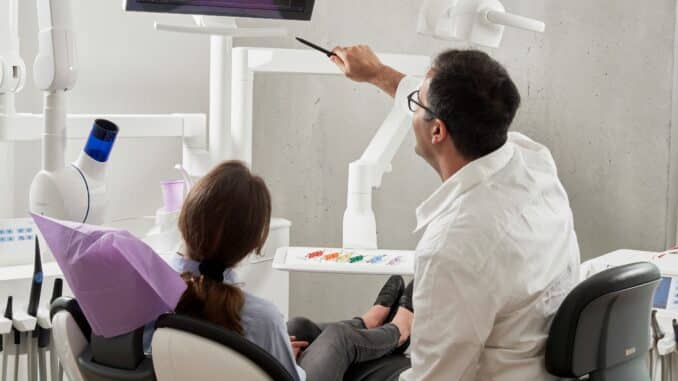
Vision insurance refers to very basic eye care, which is normally excluded from most health insurance plans, or is added as a rider to a health insurance plan or to a dental insurance plan.
Insurance companies will vary considerably as to how much coverage they actually provide and at what cost, but the basics normally fall into a couple of categories.
The intent is to provide some level of cost if an individual requires an eye test, or if the individual needs some type of spectacles or contact lenses that are deemed to be medically necessary. There may also be some type of coverage for specific types of laser surgery that relate to conditions commonly known as shortsightedness or long sightedness.
Vision insurance is normally fairly limited, and there will be strict restraints on the number of eye tests that are permitted to be covered on an annual basis, and also strict conditions on the number of spectacles or contact lenses, types of frames etc that are covered.
The exclusions that apply to vision insurance normally many, and it is important to realise that a lot of exclusions could be referred to as effectively be cosmetic. To the individual they may not seem cosmetic, but from an insurance company’s point of view they are not necessarily deemed to be clinically or medically necessary.
Exclusions
Vision insurance or lack of it should not deter people from seeing the real need behind it, which is for some type of healthcare prevention in relation to sight an ongoing vision issues. Healthcare insurance is notoriously bad in helping people access preventive measures, rely much more on a front end approach to helping deal with things when they go wrong.
This is not necessarily a criticism of the insurance industry, but is simply a fact of how their business model works, and often the lack of alternatives. The reality is that with any type of preventative measures, there is a normally minimal cost involved, and is important to realise that whilst this may mount over time, it is an area that individual should take their own responsibility for.
With vision care, this is especially important. Depending upon where you live, it is often viable if you shop around to obtain relatively cheap primary-care tests for eyesight and for the costs of spectacles and contact lenses. It is an area of healthcare where research both online and locally can yield huge benefits.